How the 2028 Olympics Could Transform Nevada Swimming

Now the 2028 Los Angeles Olympics could give Nevada’s quieter sports scene something different: a runway.
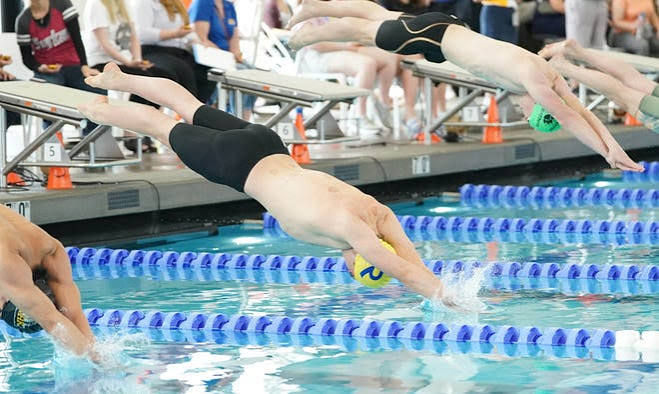
swimmers competing in the water
For swimming, that timing matters. Nevada doesn’t have the long aquatic identity of California, Florida, or Texas. It doesn’t have ocean culture on every corner. It has heat, public pools, parent carpools, swim clubs, high school meets, and one of the most respected club programs in the country: the Sandpipers of Nevada.
The Sandpipers, based in Las Vegas, have become a national force. They’re widely discussed as one of the top club teams in the United States, often framed as the country’s second strongest swim team by elite results and depth. That’s not a small claim for a program in a desert city better known for entertainment than age-group distance sets.
With LA28 close enough for Nevada families to drive or fly in easily, the next Olympic cycle could change how the state sees youth sports, how it funds aquatic facilities, and how young athletes imagine what’s possible.
The 2028 Olympics could make Las Vegas a regional Olympic hub
The Los Angeles Olympics won’t be a Nevada event on paper. LA28 is a Southern California Games, with major venues across the Los Angeles area. But Las Vegas is close enough to feel the pull.
That pull could show up in several ways:
More pre-Olympic training trips and camps in the Southwest
More tourists extending Olympic travel through Las Vegas
More attention on regional clubs that already produce elite athletes
More families looking at youth sports as a real development path
More pressure to improve pools, meet hosting, coaching pipelines, and access
Las Vegas already knows how to host major sporting events. The city has hotels, flights, entertainment, food, and event infrastructure at a scale few places can match. What it doesn’t have, at least not yet, is a public reputation as a swimming city.
That gap is where the opportunity sits.
Olympic years tend to create “try it” moments. After a strong Olympic showing, parents search for local teams. Kids ask about lessons. High school athletes start watching trials. Clubs see interest spike. USA Swimming has long treated Olympic visibility as one of the sport’s best recruitment tools, and LA28 has a built-in advantage for Nevada because the Games will feel nearby rather than far away.
The local challenge is turning attention into access. Swimming isn’t as simple as buying a ball and finding a court. Families need pool time, transportation, coaching, meet fees, suits, caps, goggles, and long-term patience. In a city where summer heat makes water activities feel natural, competitive swimming still depends on facilities and organized programs.
That’s why the next year matters. If Nevada wants the 2028 Olympics to mean more than watch parties, the work starts with youth swimming.

little girl learning how to swim
Swimming matters in Nevada because it builds more than athletes
Swimming adds something special to that mix of youth sports.
It teaches water safety in a state full of backyard pools, hotel pools, lakes, and recreation areas. It gives athletes a fitness base they can use for life. It also rewards consistency more than flash. A young swimmer doesn’t become national-level because of one good weekend. Progress comes from months and years of technique work, aerobic training, meet experience, and learning how to handle disappointment.
That’s a healthy lesson in a city often built around instant entertainment.
For locals, strong youth programs give students more identity and more college possibilities. For visitors, swim meets can quietly add to sports tourism. Families travel for invitationals, state championships, sectional meets, and national-level competitions. They book rooms, eat out, and spend full weekends around pools.
Las Vegas already understands tournament economics through volleyball, soccer, cheer, and baseball. Swimming can be part of that same sports ecosystem, especially if the city keeps improving competition-ready aquatic spaces.
The Sandpipers show what happens when a club sets a serious standard and sticks with it.
The Sandpipers of Nevada turned a desert club into a national name
The Sandpipers of Nevada are not famous because of hype. They’re famous because their athletes keep showing up at major meets.
The club has earned USA Swimming Gold Medal status in the national Club Excellence program, which recognizes teams based on elite athlete performance. That kind of recognition puts a club in the same conversation as the best programs from traditional swimming hotbeds.
At the center of the program is Ron Aitken, the Sandpipers’ longtime head coach and a major figure in Nevada swimming. Aitken is especially known for developing distance swimmers and open water athletes, two areas that demand patience, toughness, and careful pacing.
His coaching philosophy is often described through the way the team trains and races:
Build a strong aerobic base before chasing shortcuts
Teach athletes to be comfortable in hard events
Develop long-term habits instead of one-season peaks
Create accountability inside the training group
Let success come from daily work, not just talent
That approach fits the Sandpipers’ results. Distance swimming and open water racing are not glamour events for impatient athletes. The training is demanding. The races are tactical. The improvement curve can be slow. A club that thrives there has to create a culture where athletes buy into boring, difficult, repeatable work.
The Sandpipers have done that in Las Vegas, which is exactly why their rise feels so important for Nevada.
They’ve also helped shift the way people talk about local swimming. A generation ago, many Nevada swimmers had to leave the state, or at least look outside it, to be seen as serious national prospects. Now, the Sandpipers have proved that an athlete can train in Southern Nevada and reach the Olympic level.
The Sandpipers’ Olympic pipeline is already real
The strongest argument for Nevada’s swimming future is simple: the pipeline already exists.
The Sandpipers have produced or trained athletes who reached the Olympics, including major names from Tokyo and Paris. Some competed for the United States. Others represented other countries after training in Las Vegas. Together, they’ve made the program part of the global conversation.
Athlete | Olympic connection | Why they matter to Nevada swimming |
Katie Grimes | U.S. Olympian in Tokyo 2020 and Paris 2024 | One of the clearest examples of a Las Vegas-trained swimmer reaching the top level while still young |
Claire Weinstein | U.S. Olympian in Paris 2024 | Part of the next wave of Sandpipers athletes making national teams |
Ilya Kharun | Canadian Olympian in Paris 2024 | Trained with the Sandpipers and won Olympic medals in butterfly for Canada |
Bella Sims | U.S. Olympian in Tokyo 2020 | Helped show the club could produce athletes ready for the biggest stage |
Erica Sullivan | U.S. Olympic silver medalist in Tokyo 2020 | A distance standout connected to the Sandpipers’ endurance identity |
Bowe Becker | U.S. Olympic gold medalist in Tokyo 2020 | A Las Vegas-area success story who added to the region’s Olympic credibility |
Katie Grimes is the headline name for a reason. She made the U.S. Olympic team as a teenager for Tokyo, then returned for Paris and won silver in the 400-meter individual medley. She also became one of the early U.S. qualifiers for Paris through open water, which fits the Sandpipers’ reputation for building athletes who can handle long, punishing races.
Claire Weinstein’s Paris selection matters too because it shows this wasn’t a one-athlete moment. Strong clubs don’t just produce one star. They keep putting athletes into national finals, relay pools, junior teams, senior teams, and international meets.
Kharun’s Paris medals added another layer. Even though he represented Canada, his development through the Sandpipers connected Las Vegas training to Olympic podium results. That kind of story travels far beyond Nevada.
For a young athlete standing at a local pool in Henderson, Summerlin, or central Las Vegas, those names make the Olympic path feel less abstract. The dream still requires rare talent and brutal commitment, but it no longer feels like something that only happens somewhere else.
Nevada still has to build support around the sport
Swimming in Nevada has strong pockets of support, but it doesn’t always get the public attention that other sports receive.
Part of that is visibility. Swim meets are long. Events can last seconds or many minutes. The best races often happen in facilities that seat far fewer fans than an arena or stadium. Unless someone has a child in the sport, they may not know when major meets are happening.
Part of it is cost and access. Competitive swimming requires:
Regular pool availability
Paid coaching
USA Swimming registration for club athletes
Meet entry fees
Travel for higher-level competitions
Technical suits at older age levels
Year-round family scheduling
That can make the sport feel exclusive if communities don’t protect affordable lesson programs, school teams, and public pool access.
Still, Nevada has a real foundation. High school swimming gives athletes a school-based entry point. Club programs give serious competitors a year-round path. Public pools and municipal aquatic centers keep the sport connected to the community. The Sandpipers give the state a national model.
State championship sites also help shape the sport’s identity. Nevada high school swimming and diving championships, governed by the Nevada Interscholastic Activities Association, have used major aquatic venues such as UNLV’s Buchanan Natatorium in Las Vegas and the Carson City Aquatic Facility. Depending on the season, classification, and meet format, championship locations can rotate or vary, so athletes and families usually check the NIAA schedule for the current host site.
Those venues matter. A state championship pool is where young swimmers can compete against the best in the state. It’s where club teammates become rivals. It’s also where the sport feels bigger than morning practice.
If LA28 sparks more local interest, Nevada will need more than elite names. It’ll need enough lanes for beginners, enough trained officials for meets, enough coaches for age-group growth, and enough public enthusiasm to make swimming feel like a sport worth supporting.
What it takes to become a competitive swimmer with the Sandpipers
Joining a serious club like the Sandpipers is different from signing up for a casual lesson program. Athletes need basic water skills first, then they’re usually evaluated for placement in a training group that matches their age, ability, and commitment.
A typical competitive path looks something like this:
Learn to swim safely
Before racing matters, water safety and basic stroke skills come first.
Join a developmental or age-group program
Younger swimmers learn legal strokes, starts, turns, lane etiquette, and how meets work.
Register with USA Swimming
Club competitors generally need USA Swimming membership to race in sanctioned meets.
Train consistently
Progress comes from regular practices, not random attendance. As swimmers advance, training may include mornings, afternoons, dryland work, and longer weekend sessions.
Race often enough to learn
Meets teach pacing, nerves, warm-up routines, and how to recover from bad swims.
Hit qualifying standards
Higher-level meets require time cuts. Local meets lead to state, sectional, Futures, Junior Nationals, Nationals, Olympic Trials, and beyond.
Adapt outside the pool
Sleep, nutrition, school balance, injury prevention, and family support become more important as the level rises.
Becoming an Olympian is much harder. For U.S. pool swimmers, the path runs through the U.S. Olympic Team Trials. In most individual events, swimmers must first qualify for Trials, then finish at or near the top under USA Swimming’s selection rules. Relay selection depends on specific freestyle event results and team needs. Open water selection has its own international qualification process.
That means even a Sandpipers athlete with national talent has to clear several gates. Club training can prepare someone, but nobody gets handed an Olympic spot because of the team name on their cap.
That’s part of what makes the Sandpipers compelling. Their best athletes don’t just train hard. They learn how to compete in systems where there’s very little room for error.
Swimming is a year-round sport in Las Vegas
Yes, competitive swimming is year-round.
That surprises some people who only think about swimming as a summer activity. In club swimming, the calendar usually runs in two main seasons:
Season | Typical timing | Pool format | What athletes focus on |
Short course season | Fall through winter | 25-yard pools | Technique, racing often, high school prep, championship meets |
Long course season | Spring through summer | 50-meter pools | Olympic-distance racing, national meets, summer championships |
Open water season | Often spring and summer | Lakes or open water venues | Distance racing, tactics, pack swimming, endurance |
Club swimmers may take short breaks after major championship meets, but the sport doesn’t really stop. The best athletes build fitness over years. They may change training emphasis, but they don’t disappear for half the year.
In Las Vegas, the climate helps in some ways. Outdoor training is possible for much of the year, and warm weather keeps swimming visible. The hard part is lane space. A strong year-round program needs reliable pool access, especially when club teams, high schools, lessons, recreational swimmers, and public programming all need water.
That’s where Olympic momentum could matter again. If LA28 pushes more families toward swimming, Nevada will need to treat pools as sports infrastructure, not just recreation amenities.

Sandpipers of Nevada athletes with Ledecky
The real LA28 legacy for Nevada could be local
The 2028 Olympics will bring global attention to Southern California, but Nevada has a chance to borrow some of that light and turn it into something lasting.
For Las Vegas, the opportunity isn’t just hosting visitors on their way to the Games. It’s building a stronger youth swim culture around one of the most demanding and useful sports kids can learn. It’s making sure public pools, high school teams, club programs, and elite pathways connect instead of competing for scraps.
The Sandpipers of Nevada already proved that a Las Vegas swimmer can become an Olympian. Ron Aitken and his staff have built a program known for discipline, endurance, and national-level results. Katie Grimes, Claire Weinstein, Ilya Kharun, Bella Sims, Erica Sullivan, and others have made that proof visible.
Now the question is what Nevada does with it.
If the state invests in access, facilities, coaching, and meet support, LA28 could be remembered as the moment swimming in Nevada stepped out of the background. Not just for future Olympians, but for every kid who learns that the pool can be a place to grow stronger, tougher, safer, and more confident.


We’re a swim family, done it growing up too! Love the recognition for the sport